

Upload your design & get your customized product.
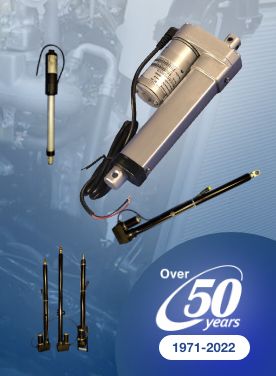





Venture Mfg. Co. is working to become a leader in the military sector with a feature-rich range of actuators. Our military actuator utilizes superior designs for use in critical environments and harsh conditions. Size and weight optimization are key to mission success. Venture Mfg. Co. recognizes and supports this need.
The Venture team works closely with you to design and prototype the precise actuation technology you need. We can fit the maximum force capabilities in compact actuator designs. Military operations need preform under various conditions such as: high altitudes, sub-zero temperatures, high temperatures, and unfavorable weather. Our actuators are manufactured in keeping with these harsh demands, while conforming to military specifications and codes.
Venture Mfg Co also offers a comprehensive range of complementary accessories and control systems for military actuators. When you need a complete actuation solution, we are your go-to firm.


1. How do engineers select the right military actuator for mission-critical defense applications?
Selecting the right military actuator involves evaluating force, stroke length, speed, duty cycle, mounting, power requirements, and operating conditions. Engineers must also consider vibration, shock, moisture, dust, and temperature extremes to ensure reliable performance. As an experienced military actuator manufacturer, Venture Mfg. Co. works with OEMs to develop actuator solutions that meet demanding defense requirements while delivering long-term reliability.
2. Which actuator specifications have the greatest impact on military vehicle reliability and operational performance?
Important specifications include load capacity, stroke length, operating speed, positioning accuracy, duty cycle, environmental protection, and service life. The actuator should provide sufficient performance for the intended load and movement requirements while tolerating the environmental conditions in which the equipment will operate.
3. What challenges should OEMs consider when integrating linear actuators into military vehicles and defense systems?
Integration requires consideration of available installation space, mounting points, power supply, wiring, controls, load paths, and mechanical alignment. The actuator may also need to withstand shock, vibration, moisture, dust, and temperature variations. Early evaluation of these factors can help prevent mechanical interference and redesign during later development stages.
4. How can custom military actuators reduce system weight without sacrificing load capacity or durability?
A custom actuator can be designed around the application's actual force, stroke, speed, mounting, and space requirements, which can help avoid unnecessary material and oversized components. Electromechanical actuators can also provide an alternative to hydraulic systems in applications where reducing pumps, hoses, and fluid-related components is beneficial.
5. Which environmental testing standards are important for military actuators used in harsh operating conditions?
The applicable testing depends on the intended application and operating environment. Common areas of evaluation include shock, vibration, temperature extremes, humidity, dust, corrosion, and ingress protection. Military applications may also reference standards such as MIL-STD-810, depending on the equipment and procurement requirements. The required tests should be determined from the system's actual environmental conditions and applicable specifications.
6. How do electromechanical military actuators improve maintenance and lifecycle costs compared with hydraulic systems?
Electromechanical actuators do not require hydraulic pumps, hoses, or hydraulic fluid, which can reduce certain maintenance requirements and eliminate hydraulic-fluid leakage concerns. They can also provide precise electronic control and straightforward integration with digital control systems. However, the appropriate technology depends on factors such as required force, speed, duty cycle, environment, and available power.
7. What design considerations help military actuators maintain precision under heavy shock and continuous vibration?
Important considerations include rigid mounting, appropriate material selection, accurate drive components, effective sealing, proper alignment, and resistance to mechanical wear. The actuator should also be evaluated under the expected shock and vibration conditions to verify that positioning accuracy and mechanical integrity are maintained.
8. How can military actuator prototypes accelerate defense equipment development and OEM validation?
Prototypes allow engineers to evaluate fit, stroke, load capacity, speed, mounting, controls, and system compatibility before committing to production. Testing a prototype can reveal mechanical or electrical issues early and provide data for refining the final actuator design.
9. What information should defense OEMs provide when requesting a custom military actuator solution?
Useful specifications include required force, stroke length, speed, duty cycle, mounting configuration, available space, power supply, control method, operating temperature, environmental exposure, and expected service life. Providing these details helps engineers determine the appropriate actuator architecture and performance requirements.
10. How can a complete actuator system including controls, mounting hardware, and accessories simplify military equipment integration?
A complete system that includes the actuator, controls, mounting hardware, wiring, and required accessories can simplify integration by ensuring that the individual components are mechanically and electrically compatible. This can reduce the engineering effort required to select and integrate separate components.
